| M260159 | |
| Plastics / textiles | |
| 1.0 cm | |
| 2.0 % < 2.0 mm | |
| 100.0 mg | |
| We would recommend using the Cutting Mill P-29 to comminute your sample. |
|
|
Mini Cutting Mill PULVERISETTE 29speed: 6000 revolutions per minute |
|
| Equipment: |
sieve insert: 2 mm square perforation rotor: Rotor with straight cutting edges |
|
|
|
2,1 g | |
|
|
10 mm | |
|
|
15 seconds | |
|
|
2 mm | |
|
|
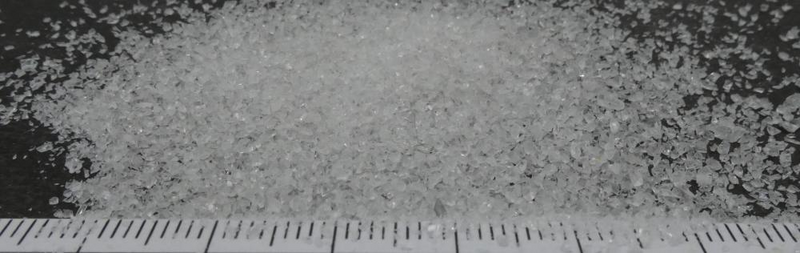
With 6000 rpm, the grinding sound was typical and after 15 seconds, no further sound of grinding was recognized.
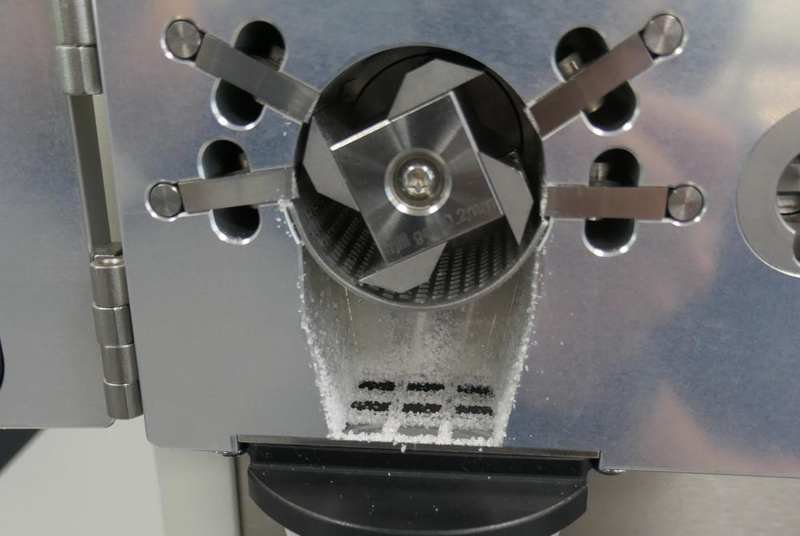
The mill was stopped after 15 seconds, only minimal residues were present below the sieve insert (on top of the protecting grit), electrostatic charged sample was left and was brushed into the collecting vessel. The cleaning of the grinding chamber was performed rapidly by vacuuming with a soft brush. Finally, we used compressed air to blow off last traces of the ground sample. |
|
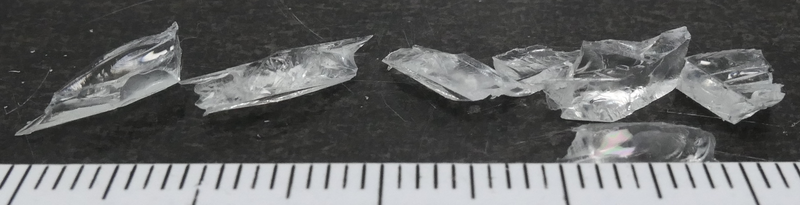
| Pictures: | Original sample |
|
| Opened grinding chamber |
|
|
| Example of the output |
|
|
|
|
Mini Cutting Mill PULVERISETTE 29speed: 4000 revolutions per minute |
|
| Equipment: |
sieve insert: 4 mm square perforation rotor: Rotor with straight cutting edges |
|
|
|
2 g | |
|
|
10 mm | |
|
|
10 seconds | |
|
|
4 mm | |
|
|
If thermal or mechanical stressing of the PMMA sample should be minimized, it is possible to reduce the speed settings and picking a larger perforated sieve insert.
We prepared a batch of 2 grams and fed and ground the sample with 10 seconds only.
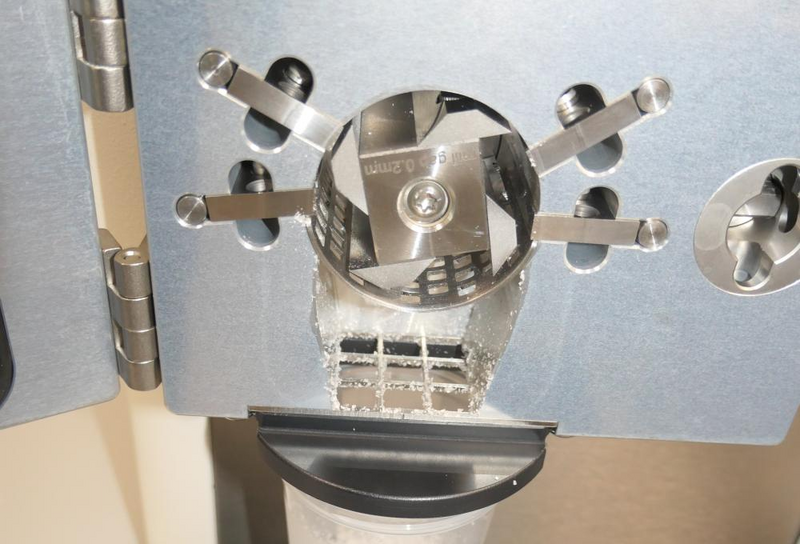
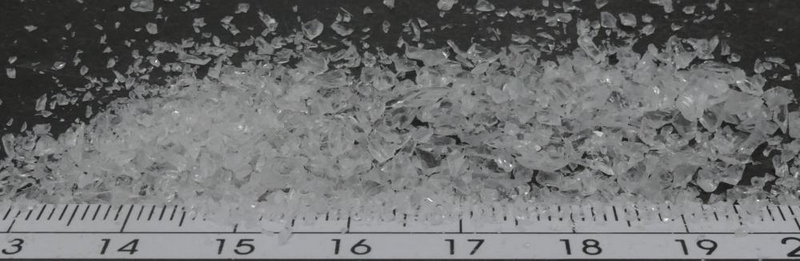
As expected, the residues inside the grinding chamber are a little less (easy to remove) and the achieved output is lightly coarser (probably still rewardingly fine to dissolve for your following HPLC test).
|
|
| Pictures: | Opened grinding chamber |
|
| Example of the output |
|
|